



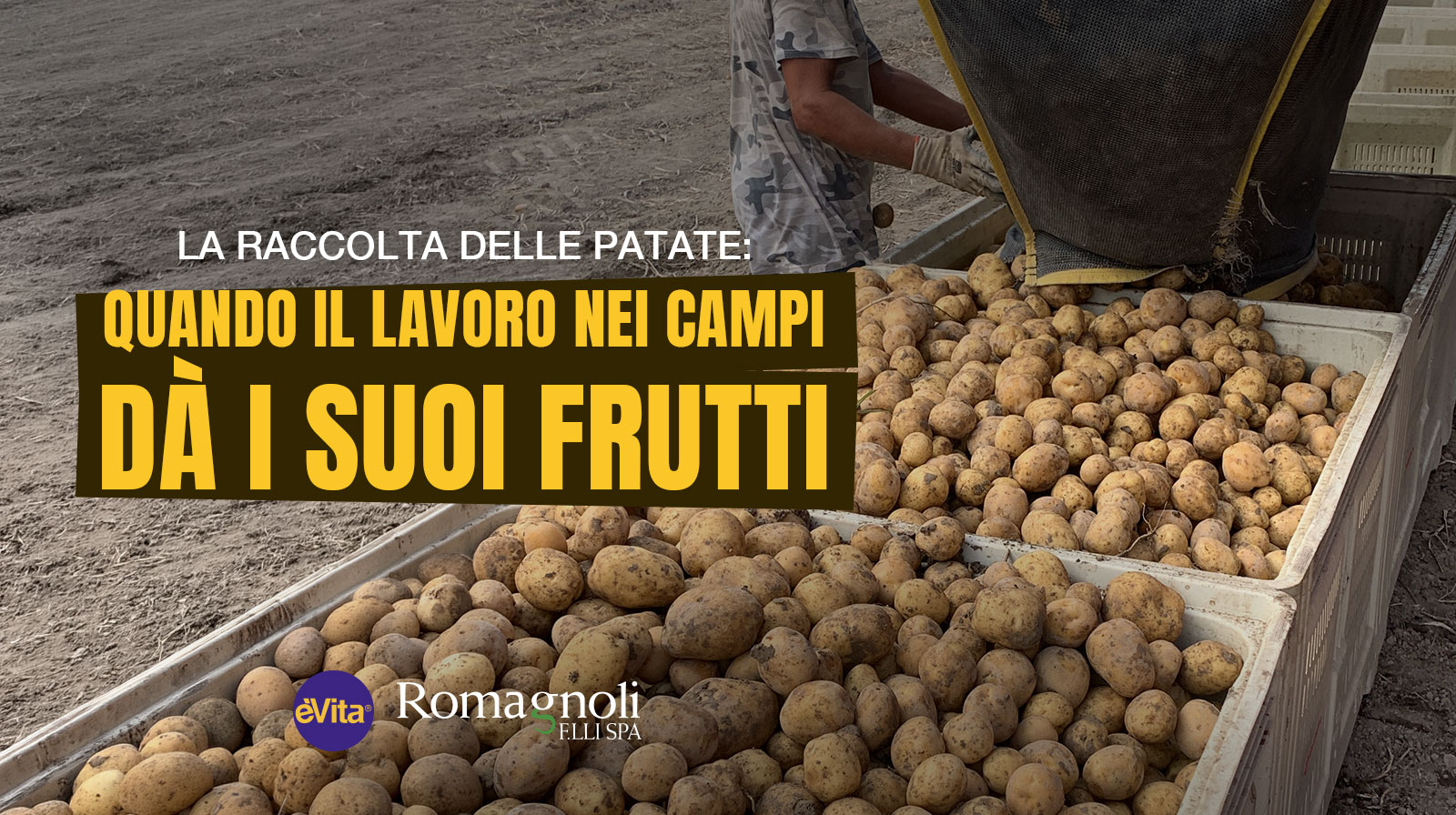
After weeks of growing underground and receiving constant care from our farmers, one of the most anticipated moments of the entire production cycle finally arrives: the potato harvest. This is the stage when months of hard work are transformed into a crop that will bring this valuable food from the fields to our tables.
Choosing the right time to harvest potatoes is essential. There is no single date that applies to every crop, as the harvesting period depends on the variety grown, the planting season and the weather conditions throughout the growing cycle. In general, potatoes are harvested once the plant has completed its vegetative cycle. A clear sign is the yellowing and gradual drying of the above-ground foliage, indicating that the tubers have finished developing and that their skins have reached the firmness needed to withstand handling and storage.
Today, harvesting is carried out using specialised agricultural machinery that gently lifts the soil, separates the potatoes from the earth and transfers them into transport vehicles. This stage also requires great care, as the tubers must be handled delicately to prevent impacts or damage that could affect their quality and shelf life.
Once harvested, potatoes begin the next stage of their journey. They undergo a series of quality checks, are selected according to their organoleptic characteristics, and then move on to the subsequent processing and packaging stages. Only after these steps do they reach retailers, preserving all the qualities that make them one of the most appreciated ingredients in our cuisine.
Understanding what happens during the harvest helps us appreciate even more the value of agricultural work and everything that lies behind the simple act of bringing a potato to the table. Every harvest is the result of months of experience, dedication and attention to detail, essential elements in ensuring a high-quality product throughout the entire supply chain.