


When it comes to a gluten-free diet, the first priority is inevitably the choice of ingredients. For people living with coeliac disease, excluding gluten does not simply mean giving up certain foods, but also learning to understand what they eat and to distinguish raw ingredients that are naturally free from this protein from products that, instead, require specific guarantees during production and preparation (source: Ministero della Salute).
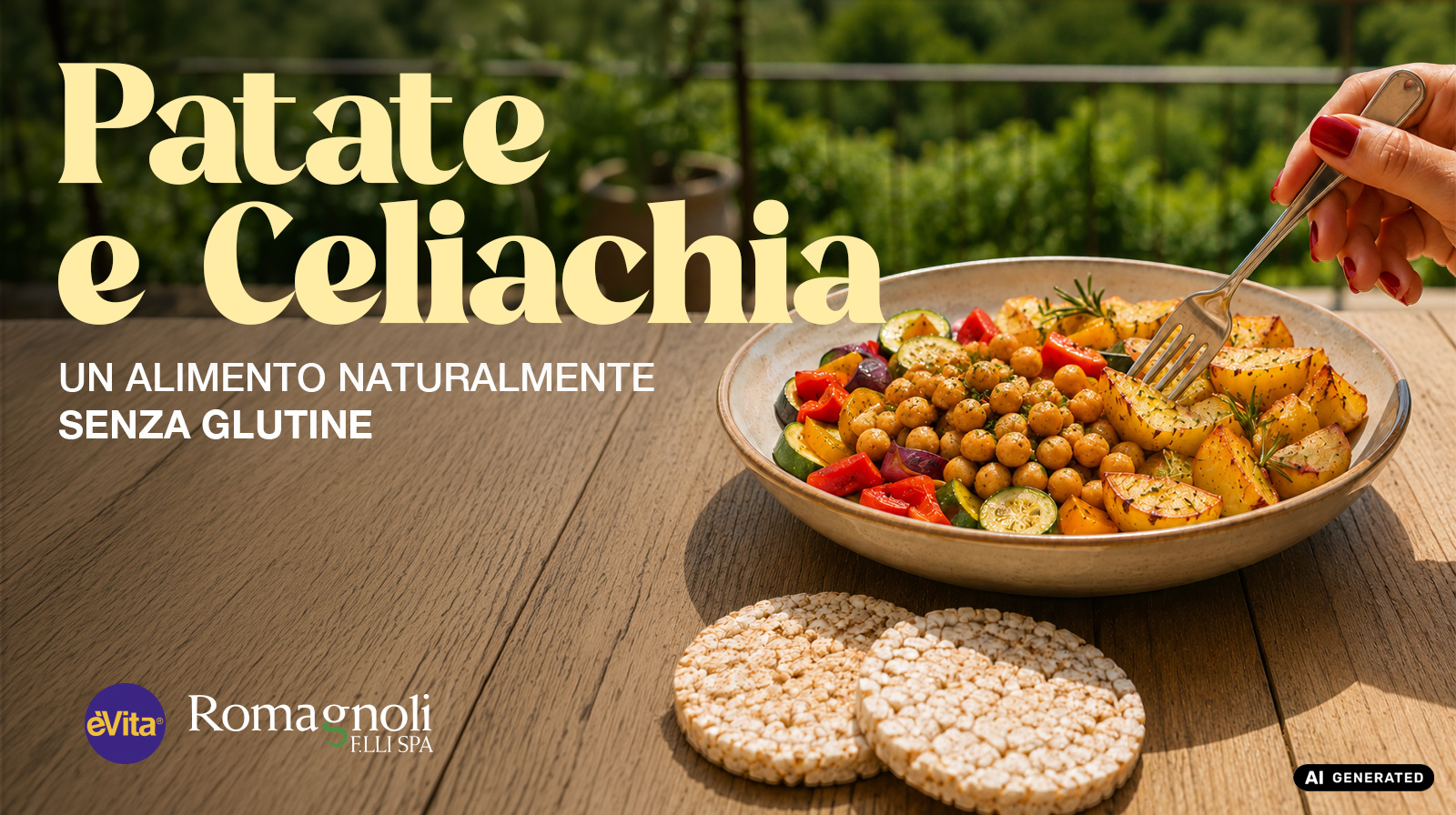
In this context, potatoes represent a valuable resource because they are naturally gluten-free. This is not the result of an industrial process or the replacement of a gluten-containing ingredient: potatoes, in their natural form, do not contain gluten (source: Istituto Superiore di Sanità). This makes them easy to include in the daily diet, using them as the basis for a wide range of preparations, from the simplest side dishes to more substantial one-dish meals.
Potatoes are particularly interesting, however, also because of their nutritional properties. They are a good source of carbohydrates, and therefore energy, and contain fibre, potassium and vitamin C. Their nutritional value may naturally vary depending on the variety, storage conditions and, above all, cooking method, but the tuber remains a food that can make a significant contribution to a balanced diet.
In the kitchen, potatoes are also highly versatile, making it possible to prepare a wide variety of recipes: boiled and dressed with oil and herbs, they can become a simple side dish; baked, they develop a crisp texture and a more intense flavour; mashed, they can be served with vegetables and legumes or used as a base for patties and bakes. They can also be used to make gnocchi, focaccia and doughs, provided that all the other ingredients used are suitable for a gluten-free diet.
This last point deserves particular attention. Saying that potatoes are naturally gluten-free does not mean that every potato-based preparation is automatically suitable for a person with coeliac disease. The risk may in fact come from added ingredients or from contamination during preparation, cooking or serving (source: Associazione Italiana Celiachia). Wheat flour, traditional breadcrumbs, certain seasonings and other products used in cooking can introduce gluten into a recipe that starts with a gluten-free ingredient. Therefore, when a preparation is intended for a person with coeliac disease, it is essential to always check the suitability of all ingredients and take care to avoid cross-contamination.
For people following a diet due to coeliac disease, potatoes therefore represent more than simply an alternative to bread, pasta or other foods traditionally found on the table. They are, in their own right, a raw ingredient that makes it possible to combine safety and variety, two fundamental aspects when a strict diet is a daily necessity.